California poppy
Eschscholzia californica
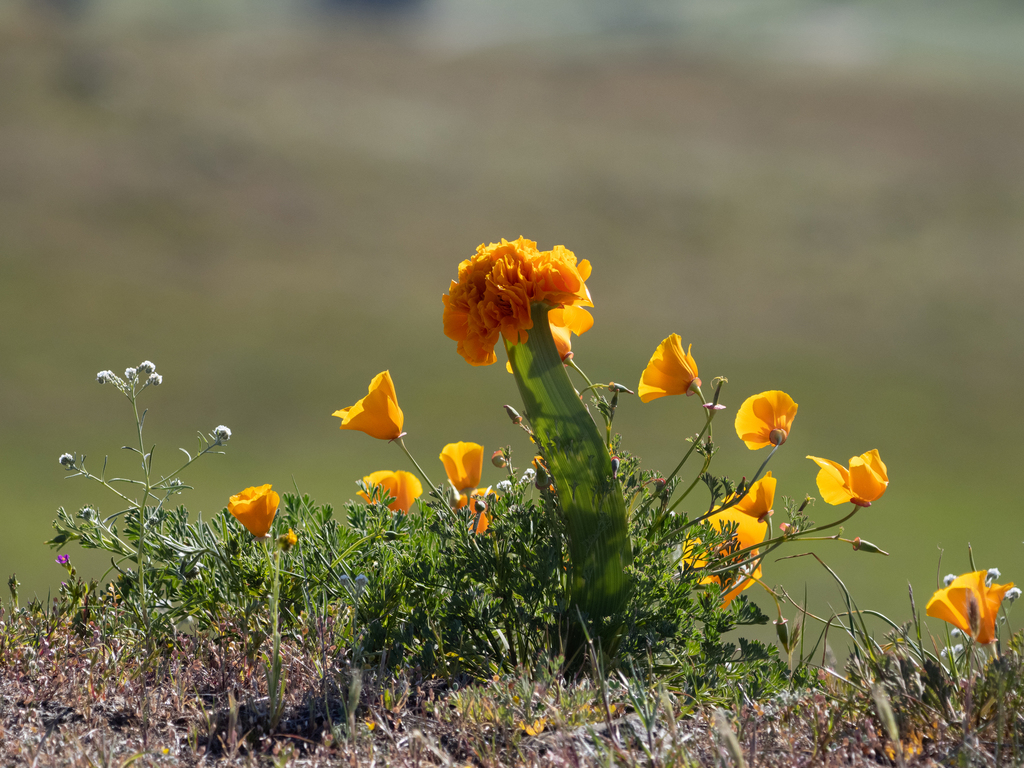
Cup-shaped orange-to-yellow flowers with four petals, finely divided blue-green leaves and a pointed seed pod.
- Family
- Papaveraceae
- Order
- Ranunculales
- Size
- 5–60 cm tall · flowers 2–6 cm across
- Records
- 2,787
- Peak
- Apr · Mar · May
How to recognise
What you are looking at
Cup-shaped orange-to-yellow flowers with four petals, finely divided blue-green leaves and a pointed seed pod.
Typical size: 5–60 cm tall · flowers 2–6 cm across
Habitat & behaviour
Where it lives
Open grassy slopes, dunes, road verges and disturbed ground.
How it behaves
Flowers close at night and on cold, cloudy days; reseeds freely.
Diet & timing
What it eats
Nectar and pollen source for bees and beetles.
When to look
Spring to early summer, sunny mornings.
Field tip
Look for the pointed seed pods standing above the foliage after the petals drop.
Seasonality
When it shows up
November: quiet
Where to look
Places with recent records
This species is recorded across San Francisco, but not consistently inside the parks we track. Try the nearest green space with similar habitat.
Easy to confuse with
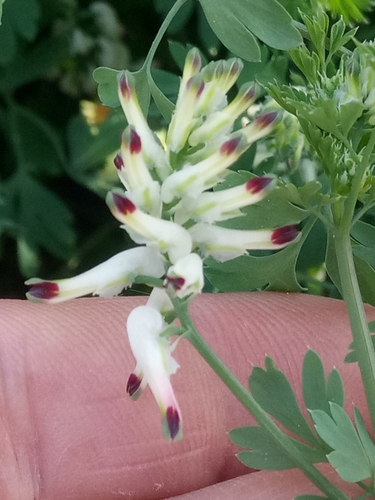
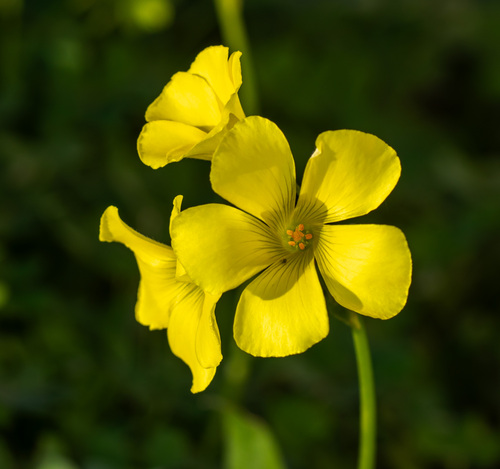
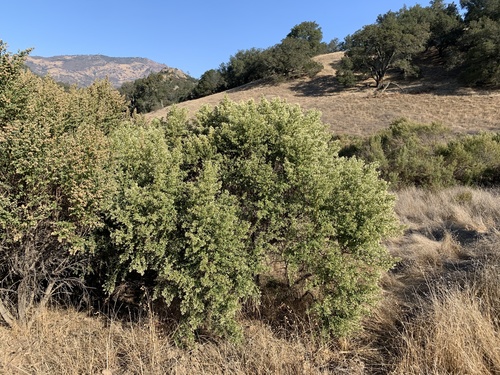
Similar species in San Francisco
Questions
California poppy in San Francisco
- Where can I see California poppy in San Francisco?
- California poppy is recorded across San Francisco, but not consistently inside the parks tracked here. Try a green space with similar habitat.
- When is the best time to see California poppy in San Francisco?
- Records peak in April, March, May. In November, activity is rated “quiet”.
Sources
Occurrence counts and seasonality are derived from GBIF records (2018–2026). Description adapted from Wikipedia via iNaturalist, licensed CC BY-SA. Photo credits appear under each image. Native or introduced status comes from iNaturalist regional checklists. Species pages are for observation only — never disturb wildlife.