Seven-spotted Lady Beetle
Coccinella septempunctata
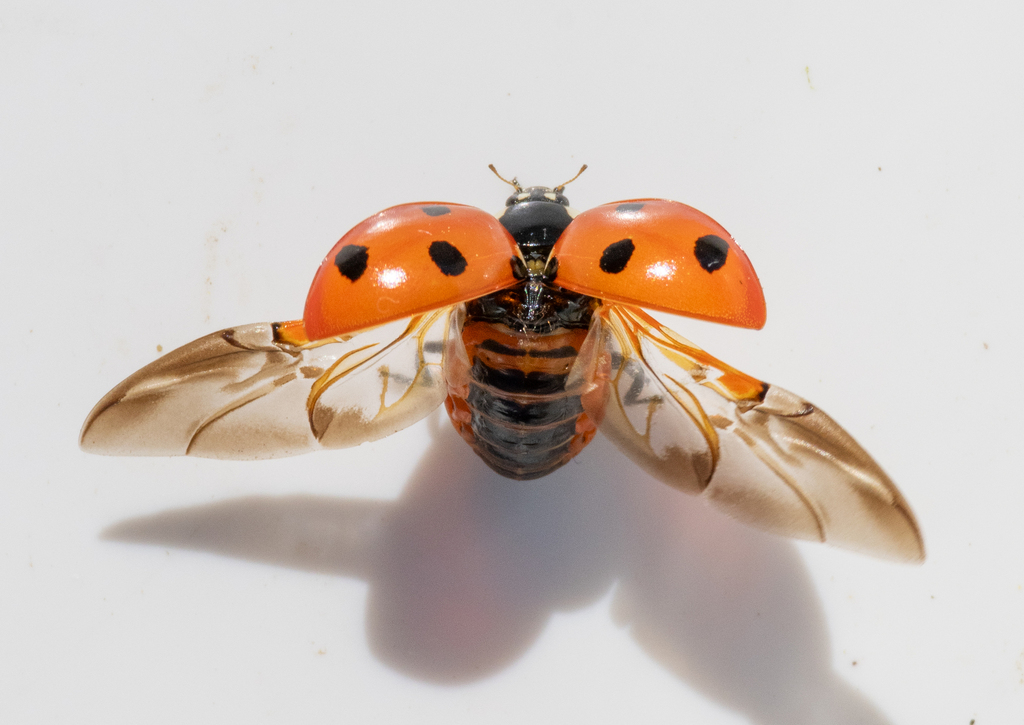
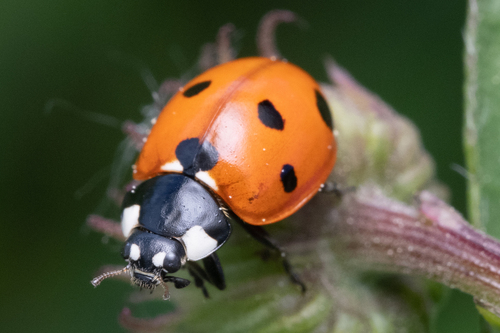
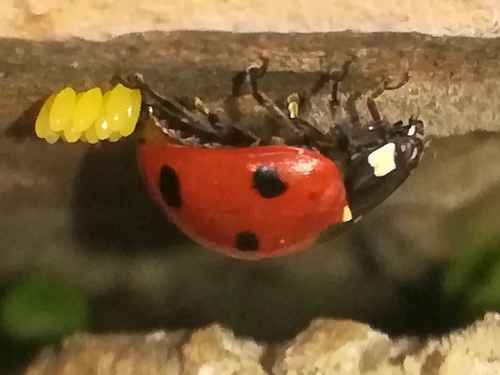
Coccinella septempunctata , the seven-spot ladybird (or, in North America, seven-spotted ladybug or "C-7"), is the most common ladybird in Europe. Its elytra are of a red colour, but punctuated with three black spots each, with one further spot being spread over the junction of the two, making a total of seven spots, from which the species derives both its common and scientific names (from the Latin septem = "seven" and punctus = "spot").
- Family
- Coccinellidae
- Order
- Coleoptera
- Status
- Introduced in California
- Records
- 893
- Peak
- Apr · Mar · May
Seasonality
When it shows up
November: quiet
Where to look
Places with recent records
This species is recorded across San Francisco, but not consistently inside the parks we track. Try the nearest green space with similar habitat.
Easy to confuse with
Similar species in San Francisco

Also recorded in
The same species elsewhere
Questions
Seven-spotted Lady Beetle in San Francisco
- Where can I see Seven-spotted Lady Beetle in San Francisco?
- Seven-spotted Lady Beetle is recorded across San Francisco, but not consistently inside the parks tracked here. Try a green space with similar habitat.
- When is the best time to see Seven-spotted Lady Beetle in San Francisco?
- Records peak in April, March, May. In November, activity is rated “quiet”.
Sources
Occurrence counts and seasonality are derived from GBIF records (2018–2026). Description adapted from Wikipedia via iNaturalist, licensed CC BY-SA. Photo credits appear under each image. Native or introduced status comes from iNaturalist regional checklists. Species pages are for observation only — never disturb wildlife.