Red Fox
Vulpes vulpes
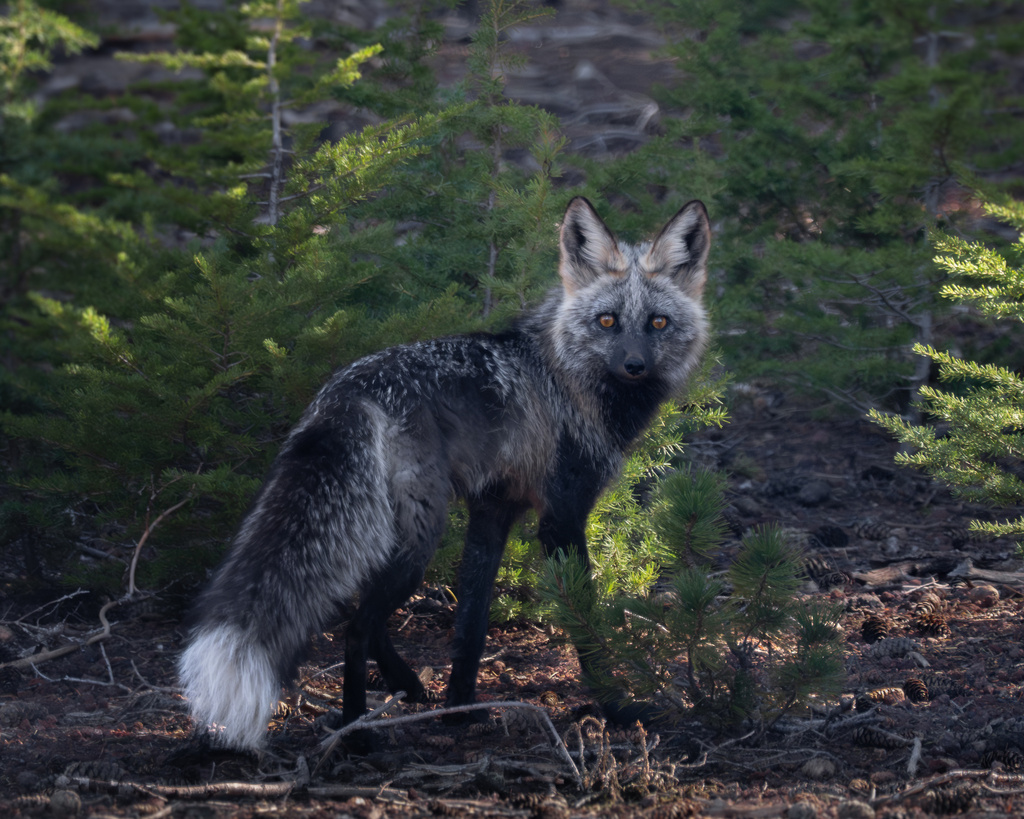
Reddish-orange coat, white throat and belly, black lower legs and a bushy tail with a white tip.
- Family
- Canidae
- Order
- Carnivora
- Size
- 45–90 cm body · 30–55 cm tail
- Records
- 14,046
- Peak
- May · Apr · Jun
How to recognise
What you are looking at
Reddish-orange coat, white throat and belly, black lower legs and a bushy tail with a white tip.
Typical size: 45–90 cm body · 30–55 cm tail
Habitat & behaviour
Where it lives
Gardens, railway embankments, allotments and park edges; increasingly urban.
How it behaves
Mainly nocturnal but often active by day in cities. Solitary hunter with a wide home range; screams and barks in winter.
Diet & timing
What it eats
Small mammals, birds, insects, earthworms, fruit and discarded food.
When to look
Dusk and through the night; winter is the loudest season.
Field tip
Look for tracks and droppings along fence lines, and listen for the winter mating scream.
Seasonality
When it shows up
November: good chance
Where to look
Places with recent records
This species is recorded across London, but not consistently inside the parks we track. Try the nearest green space with similar habitat.
Easy to confuse with
Similar species in London

Also recorded in
The same species elsewhere
Questions
Red Fox in London
- Where can I see Red Fox in London?
- Red Fox is recorded across London, but not consistently inside the parks tracked here. Try a green space with similar habitat.
- When is the best time to see Red Fox in London?
- Records peak in May, April, June. In November, activity is rated “good chance”.
Sources
Occurrence counts and seasonality are derived from GBIF records (2018–2026). Description adapted from Wikipedia via iNaturalist, licensed CC BY-SA. Photo credits appear under each image. Native or introduced status comes from iNaturalist regional checklists. Species pages are for observation only — never disturb wildlife.