Green Alkanet
Pentaglottis sempervirens
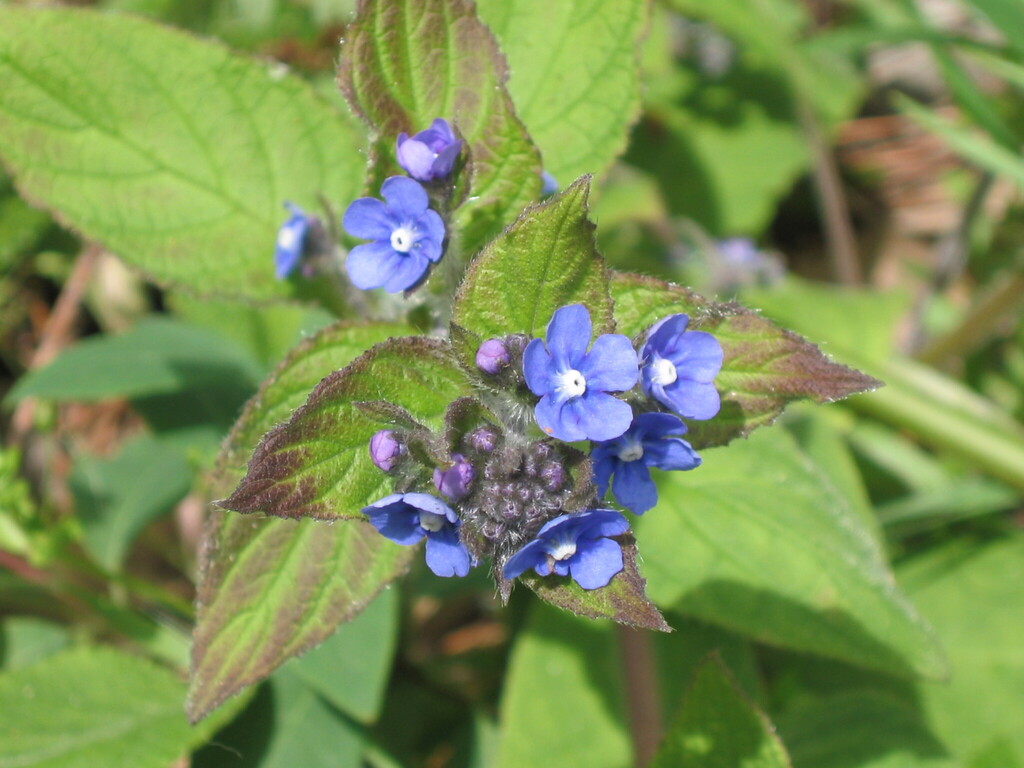
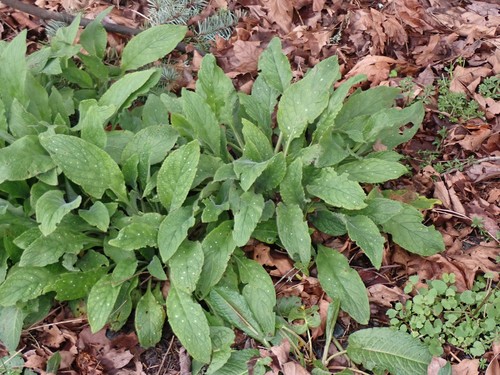
Bright blue forget-me-not-like flowers with a white centre, rough hairy leaves and stems.
- Family
- Boraginaceae
- Order
- Boraginales
- Size
- 30–60 cm tall · flowers 8–10 mm across
- Status
- Introduced in United Kingdom
- Records
- 7,732
- Peak
- Apr · May · Mar
How to recognise
What you are looking at
Bright blue forget-me-not-like flowers with a white centre, rough hairy leaves and stems.
Typical size: 30–60 cm tall · flowers 8–10 mm across
Habitat & behaviour
Where it lives
Shady hedgerows, waste ground, walls and park edges on damp soil.
How it behaves
Evergreen perennial that flowers early and spreads readily by seed.
Diet & timing
What it eats
Nectar and pollen source for early bees.
When to look
April to June.
Field tip
The white eye in the centre of each blue flower separates it from true forget-me-nots.
Seasonality
When it shows up
November: quiet
Where to look
Places with recent records
This species is recorded across London, but not consistently inside the parks we track. Try the nearest green space with similar habitat.
Easy to confuse with
Similar species in London
Questions
Green Alkanet in London
- Where can I see Green Alkanet in London?
- Green Alkanet is recorded across London, but not consistently inside the parks tracked here. Try a green space with similar habitat.
- When is the best time to see Green Alkanet in London?
- Records peak in April, May, March. In November, activity is rated “quiet”.
Sources
Occurrence counts and seasonality are derived from GBIF records (2018–2026). Description adapted from Wikipedia via iNaturalist, licensed CC BY-SA. Photo credits appear under each image. Native or introduced status comes from iNaturalist regional checklists. Species pages are for observation only — never disturb wildlife.