House Sparrow
Passer domesticus
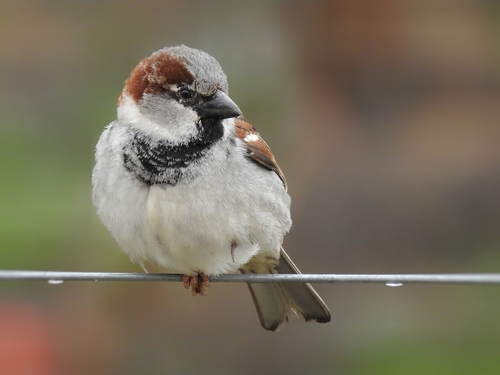
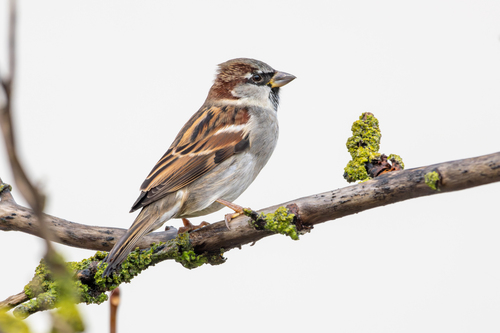
Stocky brown-and-grey sparrow. Males have a grey crown and black bib; females are plain buff with a pale eyebrow.
- Family
- Passeridae
- Order
- Passeriformes
- Size
- 14–16 cm long · 24–39 g
- Records
- 17,434
- Peak
- May · Apr · Mar
How to recognise
What you are looking at
Stocky brown-and-grey sparrow. Males have a grey crown and black bib; females are plain buff with a pale eyebrow.
Typical size: 14–16 cm long · 24–39 g
Habitat & behaviour
Where it lives
Streets, parks, station platforms and gardens — almost always near buildings.
How it behaves
Highly social and noisy; feeds on the ground in flocks and nests in cavities and crevices.
Diet & timing
What it eats
Seeds, grain, insects and scraps.
When to look
All day, especially morning feeding flocks.
Field tip
Listen for the flat cheep from hedges and pavement edges before you look.
Seasonality
When it shows up
November: possible
Where to look
Places with recent records
Parkland, lake, mature woodland
Tiergarten
The great central park of Berlin: broad avenues, a lake and dense old trees, with herons, woodpeckers and wintering goosander.
Open grassland, pioneer habitat, old runways
Tempelhofer Feld
A former airport turned into a vast open field — skylarks, wheatears and a surprising suite of dry-grass specialists in the middle of the city.
Riverbank, mature trees, lawns
Treptower Park
A Spree-side park with old plane trees and a riverside promenade — easy access to waterfowl, grebes and riverside warblers.
Easy to confuse with
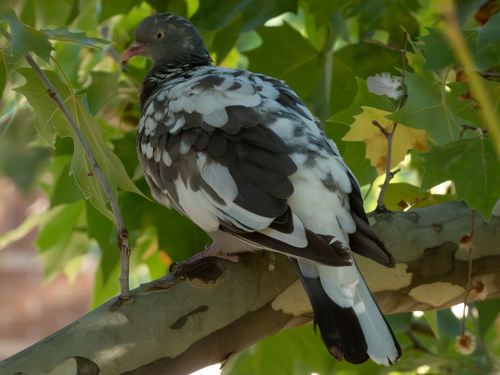
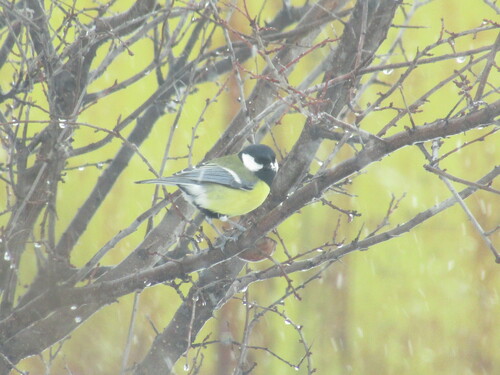
Similar species in Berlin
Also recorded in
The same species elsewhere
Questions
House Sparrow in Berlin
- Where can I see House Sparrow in Berlin?
- House Sparrow has recent records at Tiergarten, Tempelhofer Feld, Treptower Park. Check each park page for habitat notes and access.
- When is the best time to see House Sparrow in Berlin?
- Records peak in May, April, March. In November, activity is rated “possible”.
Sources
Occurrence counts and seasonality are derived from GBIF records (2018–2026). Description adapted from Wikipedia via iNaturalist, licensed CC BY-SA. Photo credits appear under each image. Native or introduced status comes from iNaturalist regional checklists. Species pages are for observation only — never disturb wildlife.