Great Spotted Woodpecker
Dendrocopos major
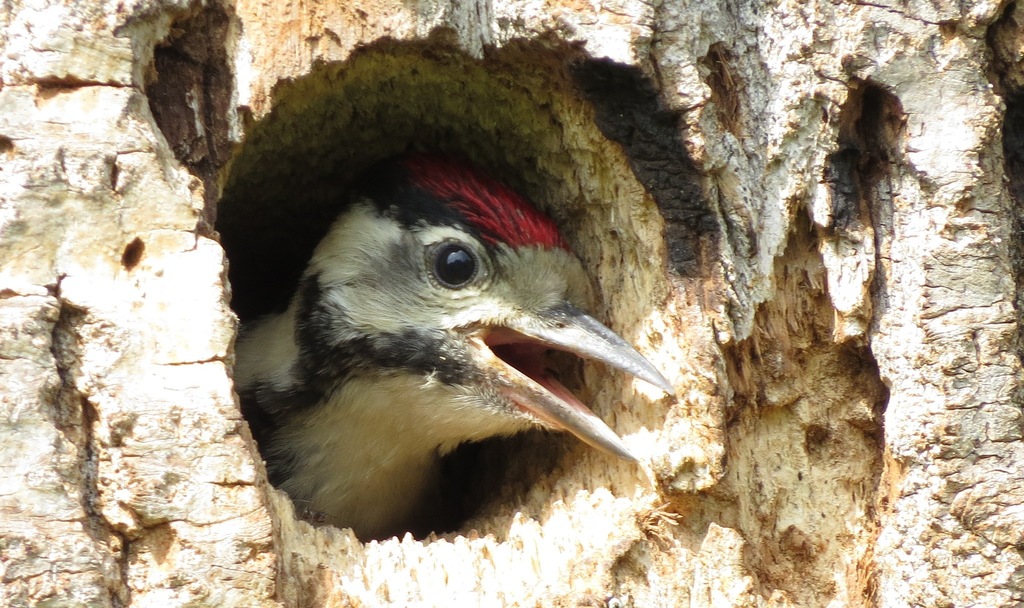
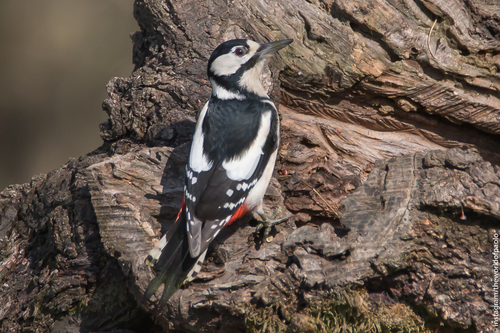
The great spotted woodpecker (Dendrocopos major) is a medium-sized woodpecker with pied black and white plumage and a red patch on the lower belly. Males and young birds also have red markings on the neck or head. This species is found across Eurasia and parts of North Africa. Across most of its range it is resident, but in the north some will migrate if the conifer cone crop fails. Some individuals have a tendency to wander,...
- Family
- Picidae
- Order
- Piciformes
- Status
- Native in Germany
- Records
- 11,720
- Peak
- May · Mar · Apr
Seasonality
When it shows up
November: good chance
Where to look
Places with recent records
Open grassland, pioneer habitat, old runways
Tempelhofer Feld
A former airport turned into a vast open field — skylarks, wheatears and a surprising suite of dry-grass specialists in the middle of the city.
Pine forest, lakes, heath
Grunewald
Berlin’s largest forest, with sandy paths, quiet lakes and a breeding population of middle spotted woodpeckers.
Island woodland, meadows, historic park
Pfaueninsel
A small island in the Havel with ancient oaks, free-roaming peacocks and a remarkably quiet bird list.
Lake, reedbed, forest edge
Müggelsee
Berlin’s largest lake, fringed by reedbeds and forest — a strong spot for grebes, terns and autumn migration.
Easy to confuse with
Similar species in Berlin
Questions
Great Spotted Woodpecker in Berlin
- Where can I see Great Spotted Woodpecker in Berlin?
- Great Spotted Woodpecker has recent records at Tempelhofer Feld, Grunewald, Pfaueninsel. Check each park page for habitat notes and access.
- When is the best time to see Great Spotted Woodpecker in Berlin?
- Records peak in May, March, April. In November, activity is rated “good chance”.
Sources
Occurrence counts and seasonality are derived from GBIF records (2018–2026). Description adapted from Wikipedia via iNaturalist, licensed CC BY-SA. Photo credits appear under each image. Native or introduced status comes from iNaturalist regional checklists. Species pages are for observation only — never disturb wildlife.